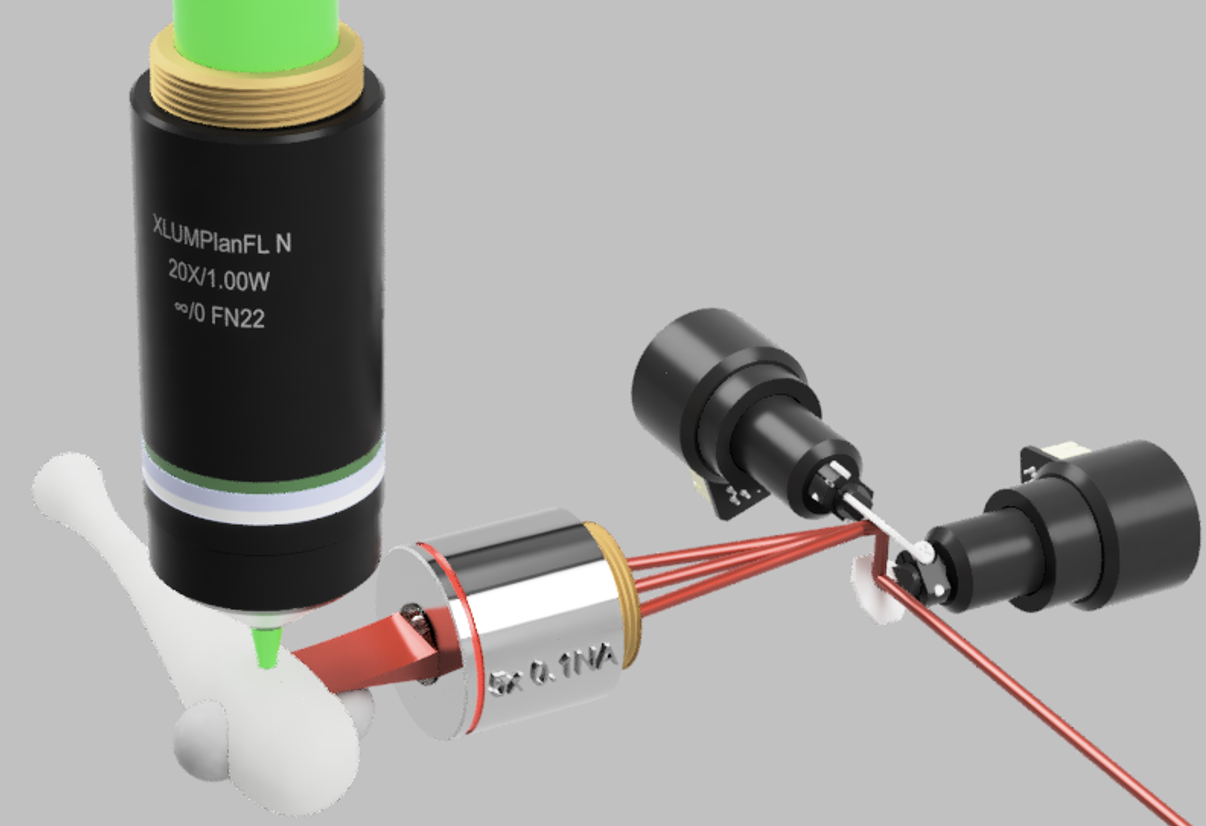
Why we care about fluorescence phenomena#
Fluorescence is a phenomenon of light emission after absorption of photon (irradiation). Unlike phosphorescence, that can last after excitation ended, fluorescence rapidly ceases after absorption of irradiation.
Fluorescence happens usually within visible range of wavelengths, 400-600nm.
Specificity#
Fluorescent tags can be targeted to compartments, specific molecules, or respond to specific events within cells:
Through chemical reaction bonds can be created between modified organic dyes and proteins to produce labeled antibodies.
Some dyes are specifically binding to molecules: BODIPY binds to lipids (cell membranes), DAPI or YOYO-1 are dyes that bind to DNA molecules
Organic dyes (LysoSensor Green) and fluorescent proteins (pH-lemon) can be used as pH indicators or calcium indicators (Fura-2)
Organic, inorganic, and in-between#
Dyes
Quantum dots
Proteins